In education, we must rebuild what the CAQ destroyed
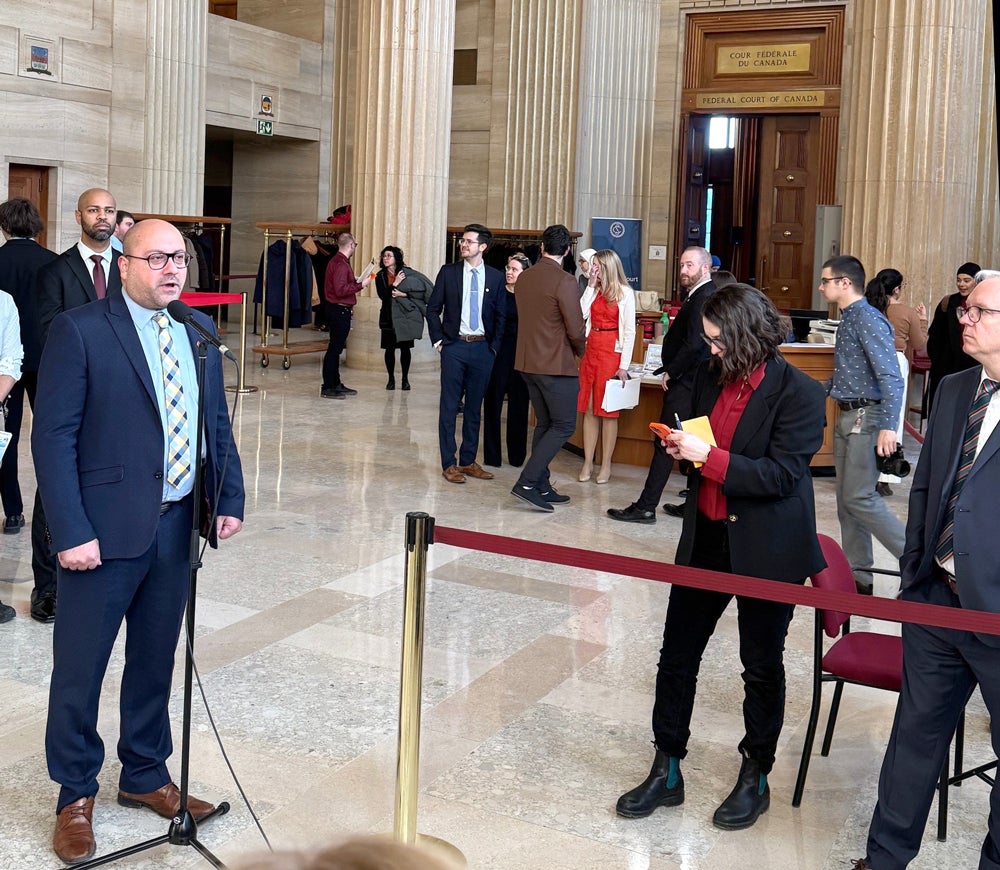
For nearly eight years the Coalition Avenir Québec treated education as a convenient target for centralization and control rather than the foundation of Quebec’s future. Grand promises of making education “the first big priority” produced chronic underperformance, democratic erosion, budget chaos and an assault on the constitutional rights of English-speaking communities.
The damage is concrete, measurable and ongoing. I can say with confidence the CAQ has compiled the worst record on education of any government in modern Quebec history.
Spending rose roughly 57 per cent between 2018 and 2024. Yet, the system is no better off than before. Public-sector five-year graduation rates crawled from 64 per cent to 65 per cent. Boys remain near 59 per cent. The government’s own seven-year diploma-and-qualification target of 85 per cent was missed; the rate sat at 82 per cent.
Higher spending per student failed to deliver meaningful gains in student success. Money went in. Results did not follow.
Budget management was chaotic and harmful under the Coalition Avenir Québec. In June 2025, then education minister Bernard Drainville imposed roughly $570 million in cuts, then announced partial reinvestments loaded with conditions, writes Joe Ortona. Francis Vachon / For Postmedia
The physical state of our schools is worse. The maintenance deficit has reached $9.8 billion, and 53 per cent of schools are now rated in poor or very poor condition. That’s an increase from earlier levels despite the investments the government often cites.
Emergency closures have occurred, and planned renovations have been delayed, or worse, cancelled — including long-promised work at Montreal’s FACE school. Meanwhile, annual funding for expansion and new construction was sharply reduced in recent budgets. Students learn in deteriorating or dilapidated buildings while the government flaunts its “accomplishments.”
Teacher shortages reveal the same pattern of failure. Last year it was reported that more than 10,000 non-legally qualified teachers were working in the system. Authorizations to teach without legal qualifications nearly tripled in five years.
More than 2,000 teachers, including hundreds at the secondary level, resigned in a single year. Rather than stabilize the profession, the CAQ rushed through 58 short training programs in four years. Research has warned these abbreviated pathways risk lowering standards and may worsen retention and shortages over time. The government treated the deep laceration of a professional staffing crisis with a Band-Aid solution.
Students with special needs have paid a direct price. The number of pupils experiencing a complete break in services rose 130 per cent over four years. Students with autism and other high-needs were sent home for months because specialized support vanished after resource cuts. Parents and boards were left scrambling.
The CAQ’s campaign promise of 5,000 classes for age-four kindergartners morphed into a target of 2,600. In the end, no classes were delivered.
Budget management has been chaotic and harmful. After years of talking the talk, in June 2025, then education minister Bernard Drainville imposed roughly $570 million in cuts, then announced partial reinvestments loaded with conditions: staffing freezes, unrealistic hiring caps, and bans on using accumulated surpluses.
In other words, the government expected boards to absorb astronomical cuts on the backs of our students — reckless, but unfortunately, also characteristic of the outgoing CAQ administration.
Earlier governments had their flaws, yet they generally preserved elected local governance and did not wage multi-year legal campaigns against minority-language education rights.
Nowhere has the damage been more overt and shameless than in the attack on local democratic control. Bill 40 sought to abolish elected school boards. French boards were converted to service centres. English boards fought and won successive court victories affirming Section 23 of the Canadian Charter of Rights and Freedoms. The government appealed to the Supreme Court anyway, spending public money to dismantle minority rights rather than fund classrooms.
Later legislation further centralized power in the minister’s office. Local expertise was sidelined. Accountability was weakened. On the French side, the service centre model has repeatedly failed.
Language measures added further harm. Bill 96 imposed enrolment caps and new requirements on English CEGEPs and created barriers that affect pathways for students. Adult and vocational education faced the threat of expanded restrictions before that effort was sidelined by the election.
English boards have spent years and significant resources in court defending rights previous generations secured. Those resources should have gone to teaching.
Earlier governments of different stripes had their flaws, yet they generally preserved elected local governance and did not wage multi-year legal campaigns against minority-language education rights.
Quebec faces real challenges: demographic pressures, labour shortages, aging buildings, and the need to raise success rates for all students, especially those of boys and children from underprivileged neighbourhoods and disadvantaged backgrounds. Solving them requires stable funding free of sudden conditions, respect for local expertise, partnership with educators, and a genuine commitment to our constitutional rights.
The CAQ offered the opposite: grandiose announcements followed by cuts, top-down control, and pointless litigation. This is the legacy of a government that spent more, delivered less, centralized power, sidelined local democracy, and treated vulnerable children and constitutional minority rights with contempt.
Elections are moments of accountability. The CAQ had eight years to prove they could be trusted with the future of our children. They failed miserably.
What Quebec needs now is a different approach. The new government has an opportunity and a responsibility to turn the page. Local democratic governance, professional expertise, and student success must once again become the priorities.
That means restoring stable and sufficient funding free of conditions and micromanagement; investing seriously in school infrastructure and in resources for students with special needs; supporting the teaching profession instead of lowering entry standards; and fully respecting the constitutional rights of English-speaking communities under Section 23 of the Charter.
If the new Parti Québécois government chooses collaboration over confrontation, co-operation over control, and partnership over power, Quebec’s students — and Quebec’s future — will be far better for it.
Joe Ortona is chair of the English Montreal School Board and president of the Quebec English School Boards Association.
Published in The Montreal Gazette, October 11, 2026






We offer training on job-related skills, upgrading of certifications, customized training packages in vocational training, and much more.

AEVS Affordable Luxury
Did you know two of our vocational centres offer premium services at a discount?
Dine at PiusSalon & Aesthetics